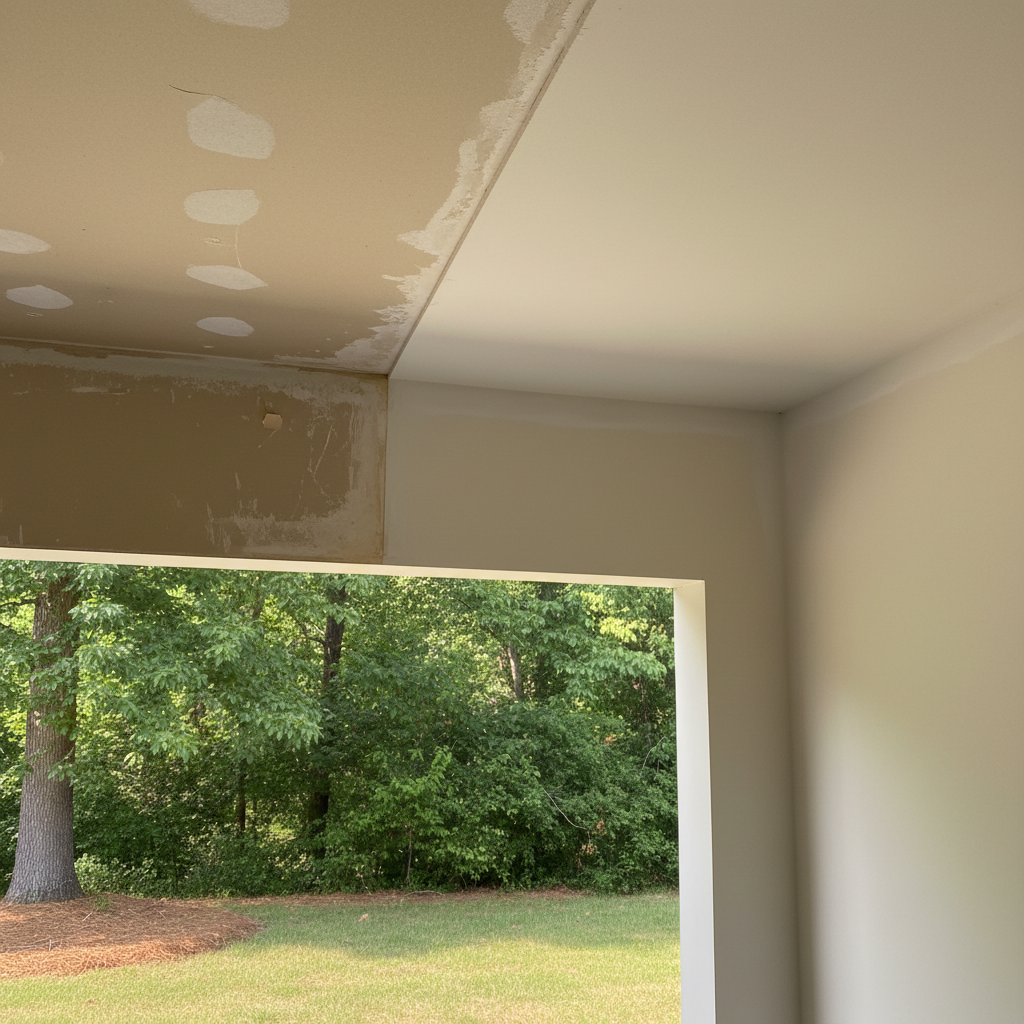
You spot a brownish ring forming on your drywall ceiling after a heavy afternoon thunderstorm, and your stomach drops. Water coming through the roof is never a minor inconvenience. Around Grayson, where we deal with sudden downpours and humid summers that bake our shingles day in and day out, figuring out how to handle that moisture damage splits homeowners into two camps. Do you patch the specific leak area, or do you replace the whole roofing system?
What we have seen working on homes all over Gwinnett County is that targeted roof leak repair is usually the first route people look at, and for good reason. It costs significantly less upfront. If a stray tree limb punctured a hole or a section of flashing around your brick chimney gave up during high winds, a localized fix makes total sense. Horizon Restoration Service can swap out a bundle of damaged architectural shingles, reseal the flashing, and check the decking underneath. The downside is that if your roof is past the fifteen-year mark, patching one spot just buys you time until the next weak point fails. Asphalt shingles here take a beating from the Georgia sun, and older surrounding materials often grow brittle.
On the flip side, a full roof replacement requires a much heavier initial investment. But you get a completely fresh start from the deck up. When we do a full replacement for homeowners through Horizon Restoration Service, we tear off the old layers, inspect the wood for rot caused by hidden leaks, and install proper synthetic underlayment that handles our humidity much better than old-school felt paper. Appearance-wise, a brand-new roof lifts the curb appeal of your entire property instantly, whereas a patch job might leave a slight color mismatch depending on how weathered your existing shingles are.
Durability also swings heavily in favor of a full replacement if your roof is aging out. Patching a leak on a roof that is already losing granules by the handful is like putting a bandage on a leaky pipe elsewhere. Maintenance requirements drop dramatically once you have a modern system overhead, saving you from playing Grayson is game of whack-a-mole with recurrent leaks every time a tropical system blows moisture up from the Gulf.
If your roof is relatively young and the leak stems from a distinct, isolated point like a pipe boot or valley, go with the targeted repair. You will save your cash and fix the immediate problem. But if your roof has seen more than fifteen years of Georgia weather and you are starting to see multiple trouble spots, patching is just throwing money at a losing battle. Save yourself the headache of interior water stains and invest in the long-term fix.